Monday, August 31, 2020

Women in Science: Practical Advice to Thrive in Science

As part of my challenge to myself this year to write more, I wanted to start a blog and to answer questions I am typically asked.  The lack of travel and the staying put this pandemic has offered seems like a perfect time to dust off my writing skills and get to work!  It has taken me  (ahem) 8 months to dust this back off and finish it but no time like the present! 
 

One question I am commonly asked is a variation on "What is your experience as a woman in science? "  and one in particular is "How do you survive being in a male dominated field?".  This variation of the question has particularly struck me.  I decided long ago as a stubborn optimistic bright-eyed enthusiastic college student writing my life mission statement that I won't settle for just surviving.  Complacency and settling turns my stomach.  I wanted to thrive in whatever I choose to do in life.  I don't want to downplay surviving. Of course we all have to survive inside the world we live in, and there are days where as much as my 18 year old self is upset I just need to survive.  I try to remember that it is my privilege that allows me to strive for more.  So I try to use that privilege in service to the greater good.  


So for the sake of this post, let's ask "How can you thrive in the sciences?"

The practical tips fall into a few categories
 
  • creating and maintaining a strong and varied support network
  • practice mental and physical self care
  • know your why and let it guide you.
  •  

    Each of these skills will help you deal with the ups and down that come into every scientist's life at some point and build a fulfilling career.


    Creating and maintaining a strong and varied support network

    We have all heard the old adage that "It isn't what you know but who you know." That is very true in the world. It sounds like a bad thing based on nepotism or favoritism of some kind but it is still true. Knowing a wide variety of people, communicating and working with those people are very important. It is how you learn, how you find new collaborators or hear of new positions or upcoming events. Those people are also people who can be there for you when you need things from recommendation letters to help understanding a difficult concept or finding your next dance class. The support network of folks can be at various stages in their career, location/institution, topic, and formality. Although there are a few formal mentor programs, most of these network interactions are somewhat informal. Keeping up with phone calls or emails once a quarter helps maintain the relationship. When contacting folks be conscious of their time. They want to help but as you go up the ladder, the number of people requesting someone's time is greater. So be effective and efficient with requests for time or meetings. Have relevant questions prepared before you ask for their time.

    Don't just think about those directly related to your technical field but also life mentors! Is there a great yoga teacher who can help you in your practice. Is there a spiritual leader who you could spend some time with exploring spirituality? What about following a great cook on social media to help with new yummy nutritious dishes? A mix of people who care about you as a person, inside and outside of your role in science, can keep you supported in all aspects of your life!

    Another key to my success was having a text buddy. This text buddy is someone you can text when you’re feeling that you need to talk about your career or just the day-to-day things that happen. I have a few and it is great to be able to blow off steam or celebrate wins in the moment. This is also a great way to keep in touch across long distances.

    Identify allies in men and women in your workplace. The system and cultural norms are the problem. All of us working together can change the system. If there are other women in your workplace, amplify each other’s voices in meetings. Call attention to your female colleagues contribution if overlooked. Ask male allies to help out with things as simple as making sure the women in the room get a chance to contribute to the conversation and checking in with the men who might also be being left out of the conversation.

    Physical and Mental Self Care

    Self care is not selfish. It is important to take care of yourself outside of a career. Your physical and mental health are important to thriving in your work. Think of it as taking care of a car. If you don’t put gas in it it won’t run. If you neglect things like oil changes or cleaning it out you eventually will have major issues. So find what works for you. Although I am a girly girl who could spend hours a day in a spa being pampered (well pre-Covid), that is not the only way to self care. Exercise, eating a healthy meal, making time to laugh at a video, playing with kiddos, puppies, kitties, or Netflix, getting a hug from a friend, sitting quietly in a space with a cup of hot tea or coffee are all great self care techniques.

    Mental health is important. If you have signs of depression or burnout, contact a professional who can help you work through these things. I have gone to therapy at various times during my career and it has always helped me to talk through what I was experiencing and how to move forward. In general, know you are not alone in how you are feeling- reach out to professionals for help. Coaching is another way to have professional support. I have recently relied on coaching for a more directed goal oriented approach to my career.

    Impostor syndrome is a real thing. The feeling that some how they let you in to a club you aren't qualified for and that someone might "find you out", we have all had it. Men feel impostor syndrome too. Impostor syndrome is real. Learn to recognize it then  acknowledge it but don’t let it drive your career. From "Confidence Code" by Kay and Shipman, women only apply when they have 100% of qualifications for a job, men will apply with 60% or less qualifications. This is part of impostor syndrome so apply apply apply!

    Rage rain aka crying in the office. I think in 20+ years in an office I have only cried once because I was sad  and my feelings were hurt, the rest is what I call rage rain- I am so angry and frustrated that I cry. I have learned to moderate some of this (focusing on and counting my breaths, having sips of water, expressing my dissent earlier, etc) as someone once gave me the advice that when you cry it then becomes about the crying and not about the issue. Which is great but there are times I am still just that frustrated. I let it out and get on with what I need to do.

    Physical health is important too. Running, yoga, dance and kayaking keep me busy and allow me to check out of work for a while and stay active. I feel my best when I can work out multiple times a week and be ready to work then when the time comes. Even a simple walk during lunch time helps burn off stress and re-center my mind. Of course, check with your doctor before starting an exercise program. 

    Know your why and let it guide you

    Knowing why you are doing something keeps you going even when you are having the inevitable hard day at the office.  This reason is larger than yourself and your work.  For me my best work comes when it is aligned with my passion for my technical work AND helps others in the community become the best version of themselves.  Self reflection to explore your "why" can be exhilarating and affirming or scary. Sometimes you might find what you are doing isn't in line with what you really are passionate about.  Minor tweaks can sometimes really help here. For example, when choosing between committees or projects, choose the one that  would better align with your why will help you feel more connected to your work.  This self reflection also helps when it is time for a new position.   You will never be 100 % ready for a change do it anyways. Make sure that the work will either fulfill your "why" or teach you something that will further your "why" overall.  

    After doing some self-reflection whether journaling or creating a visual representation of your thoughts, you can set goals to go towards your why.  Short term (weeks to months) and long term goals (months to years)  can help you organize what you need to learn as well as give you a way to know what to focus your energy on. The only person you can control is yourself. Use that vast power wisely.

    Summary

    A strong sense of why you are doing your work, coupled with a strong network and caring for your physical and mental health will help you thrive in the sciences.  I hope these tips can help create the career that inspires you and helps serve a world in need of the science you do!

    What are some other techniques used to succeed? Feel free to leave them in the comments. 

    Saturday, August 29, 2020

    Stranger things: Three weird things the sun does

    Parker Solar Probe's Mission to Solve Stranger Things

    Posted on Wed, June 20, 2018
    • by: Kelly Korreck, Solar Physicist, Smithsonian Astrophysical Observatory and Shauna Edson, Education and Public Engagement

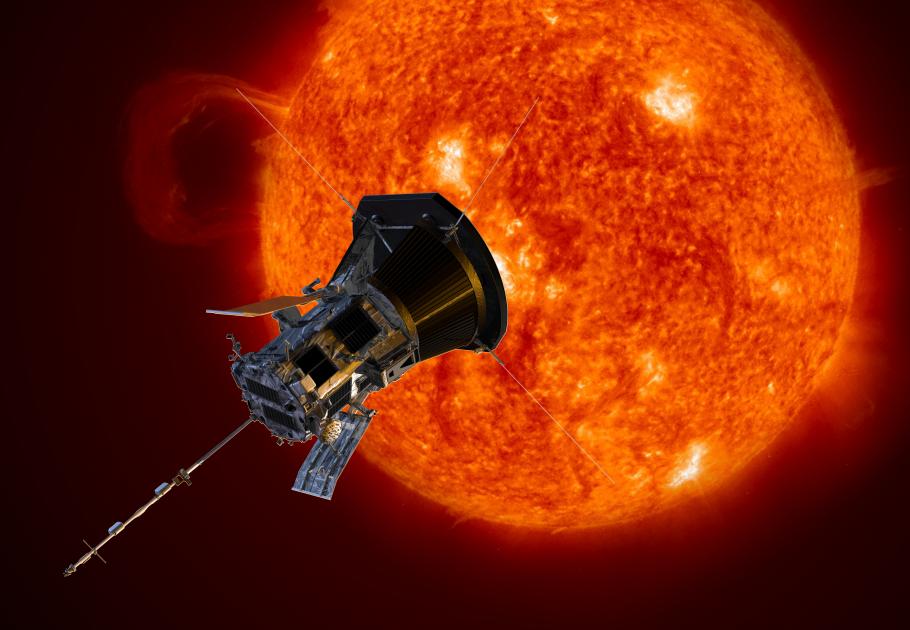
    Artist’s concept of the Parker Solar Probe spacecraft approaching the Sun.

    Artist’s concept of the Parker Solar Probe spacecraft approaching the Sun. Credit: NASA


    The original blog post can be found here.

    Friday, September 8, 2017

    What's next for the Sun after the solar eclipse?

    If you were lucky like me and got to see the corona for the first time with your own eyes on August 21, I think it is safe to say you are hooked on all things solar!  It was my first eclipse and I can still feel the excitement when describing the corona that I saw.  I saw red filaments and a wispy pointy streamer.  It was one of the most beautiful things I have seen! And the event around it was also amazing!  I saw my colleagues travel to all sorts of places from Oregon to South Carolina to Nebraska and Wyoming meeting new people and enjoying all that America has to offer.  It warms my Midwestern heart to see so many people enjoying it!  And the genuine interest and curiosity about the Sun and the great young people I met at the educational events were my favorite parts!

    It was a great event but what is next for our Sun? What does one do between eclipses?  The Sun will be expecting a visitor from Earth- NASA's Parker Solar Probe (PSP) #ParkerSolarProbe!


    Photo Credit: Johns Hopkins University Applied Physics Laboratory


    PSP will launch July 31, 2018 and will speed towards its rendezvous with Venus before it has its first encounter with the sun.  Over the missions seven year lifespan, there will be 24 encounters with the sun and 6 more (for 7 total) Venus gravity assists.   There will be 4 scientific instrument suites, FIELDS, ISOIS, SWEAP and WISPR, that will sample the Sun in various ways to understand 3 of its unsolved mysteries.  An instrument named WISPR will take pictures of all the gas and material leaving the sun. FIELDS will sample the electric and magnetic fields.  ISOIS will look in many directions to find the energertic particles that are a major player in space weather. SWEAP will sample all the hot gas (plasma) that makes up most of the Sun's wind. 

    As for the mysteries, we have some big ones!  I will cover each of those in the next few weeks blogs! The first is why when you walk away from a heat source you get hotter!  Imaging leaving a fireplace and getting warmer?!??! 

    You have less than a year till the next great solar event!  Follow Paker Solar Probe on the journey to the Sun!


    Saturday, October 10, 2015

    What should be the relationship between business and higher education?

    Higher education is a passion of mine.  I recently read the article from The New Yorker  - "Do Business People Make Good University Presidents?"  This article discusses the appointment of a businessperson as President of the University of Iowa and the reaction of the faculty of the university.  This bringing in of an "outsider" to academia brings up interesting questions like what is the purpose of a University.  A key point is that a University's purpose is not to maximize profits but to maximize student's education. This might be a foreign concept to a for-profit world.  Perhaps it could be likened to a business model that included having higher quality standards or keeping a brand "image" up or maybe a luxury market where name is key but in general a university does not follow a typical business model. However, academia could use some help in streamlining things like student services and infrastructure maintenance and expansion to maximize them for the dollars available-not eliminate them!

    For profit businesses and the public in general should realize that the value of higher education goes well beyond that student themselves. Without universities, businesses don't have an educated innovative workforce. They also don't have consumers. Business and academia should have a symbiotic relationship that can take the best of both an academic world and a business world and combine them to benefit society. That is after all what government is for- for doing things to benefit the entire population that no one other single entity could do for the greater good and for the long term even if it doesn't necessarily make business sense- things like infrastructure, education and the arts. But in an era of ever shrinking government funding, how does higher ed evolve to survive?

    What can we do to encourage the conversation between business, higher ed, and government to keep an innovative education system moving forward? Are there things that alumni can do to help? Are there models for success that should be followed? What can the future be for higher ed? Creating the right balance will be key to keeping universities relevant and thriving.

    Original post from Linked In.


    Wednesday, January 28, 2015

    Why Astronomers should participate in AAS Congressional Visit Day and Advocacy for Astronomy!

    Last March I had the honor to participate in our democracy and attend the AAS Congressional Visit Day.   The visit was such a positive experience; I want to strongly encourage you to consider becoming involved in advocacy for Astronomy as well.  

    You have never visited Congress?  No worries! The visit to the Congressional offices is actually a culmination of a few weeks of preparation.  Once you are informed by the AAS that you were selected to attend, you get to work contacting your Congressperson to set up a meeting.  There is a directory online to find out this information based on your home address (http://aas.org/resources/contacting-congress).  Remember you are the congressperson’s constituent and they are interested in hearing from you! In the AAS visit, you will also be visiting in small groups (2-3 people) so you also don't have to worry about doing this alone.

    Over the next few weeks, Joel and Josh take you through background information on the various agencies and the federal budget, and congressional structure to make sure you understand the Congressional landscape. This information is given through a few short telecons and a briefing the day before your Hill visit.

    My biggest concern before I went was: What would I say to a Congressperson about Astronomy that would be impactful?  First, the AAS briefing stressed, do no harm.  We are all astronomers and we are advocating for astronomy overall.  It isn't fund one project over another.  The visit is about being a source of information and anecdotes about how astronomy fits into local politics - all politics is local after all.  You will spend some time within your small group figuring out what are the main points you want to cover in the meetings.  Focusing on why your research is important to society.  My group focused on the jobs creation and the scientific pipeline created by the NSF REU program and advocated for a strong NSF budget.  All three of us in the group had been part of the REU program in some way and our enthusiasm for it showed.  The NSF REU program is a compelling element of astronomy that touches on job creation, training the next generation and creating a culture of innovation and inspiration.  All things that are relatable in DC.  But there are many ways an astronomer can be relatable to Congress from participating in major missions to educating the next generation at a university to just being the inspiration to think about the big questions in life like “Are there other habitable planets?”

    Why should you take 2-3 days out of your busy schedule to do this?
    Since most of our funding in astronomy is tied to the US federal government in one way or another, this experience was a great way to learn how the money is allocated to the various agencies that support our research.  We all have to advocate for what we care about and knowing how to do that most effectively is important.  And you get to connect with new colleagues and spend a few days in DC visiting the Hill.

    The website with the sign up for the AAS Congressional Visit Day can be found:
    http://aas.org/content/congressional-visits-day-2015-sign-form

    Even if you cannot attend this event, check out the AAS Policy page (http://aas.org/policy) to see how you can participate and advocate for astronomy!

    Tuesday, January 27, 2015

    Women In Astronomy: Becoming a Leader


    This blog post was originally written for the Women In Astronomy Blog.


    Women In Astronomy: Becoming a Leader:   Today's guest blogger is Kelly Korreck. Kelly is an Astrophysicist at the Smithsonian Astrophysical Observatory part of the Harva...